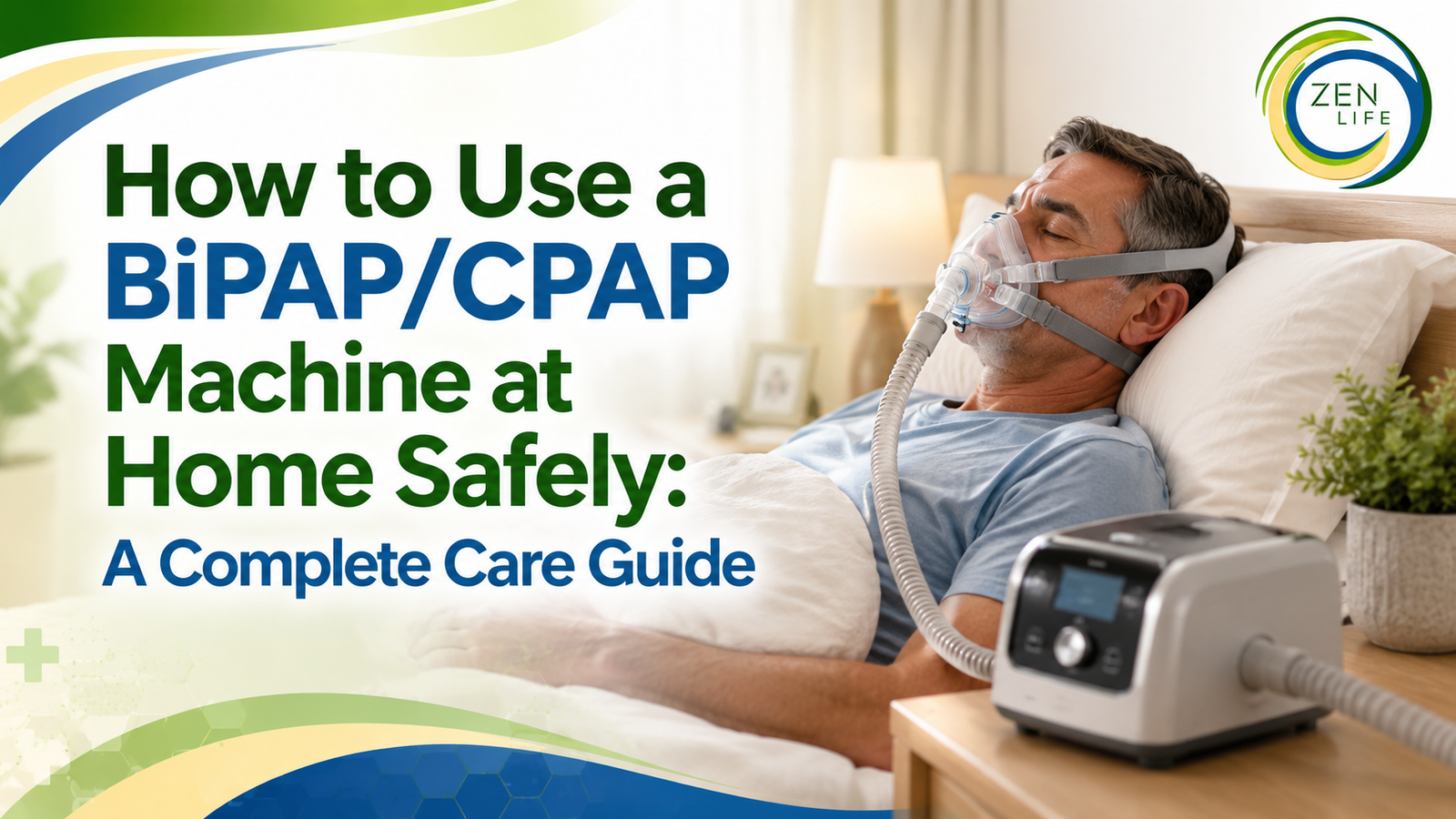
How to Use a BiPAP/CPAP Machine at Home Safely: A Complete Care Guide
If your doctor has just prescribed a BiPAP or CPAP machine for you or your elderly parent, you are probably feeling a little confused right now. It is completely normal. Most families have never touched one of these machines before, and suddenly they are told to use it every night at home. This guide answers every question you might have, in the simplest words possible, so you know exactly how to use a BiPAP/CPAP machine at home safely.
At Zenlife Home Healthcare, our trained nurses and attendants help families in Lucknow set up, monitor, and manage BiPAP and CPAP therapy at home every day. This blog shares that same practical, on-ground knowledge with you.
What Is a BiPAP/CPAP Machine and Why Do Doctors Recommend It?
A CPAP (Continuous Positive Airway Pressure) machine pushes a steady stream of air into the lungs through a mask, keeping the airway open while a person sleeps. It is most commonly used for people with sleep apnea, a condition where breathing stops and starts repeatedly during sleep.
A BiPAP (Bilevel Positive Airway Pressure) machine works a little differently. It gives two pressure levels — one when you breathe in and a lower one when you breathe out — which makes breathing easier for patients with weaker lungs. Doctors usually recommend BiPAP for patients with COPD, respiratory failure, or those recovering from a serious lung infection who need extra support to breathe on their own.
Learning how to use a BiPAP/CPAP machine at home safely starts with understanding which one has been prescribed and why, since the settings, mask type, and monitoring needs can be different for each.
BiPAP vs CPAP Machine: What Is the Difference?
This is one of the most searched questions among families, so let’s keep it simple:
| Feature |
CPAP |
BiPAP |
| Pressure type |
Single, constant pressure |
Two pressures (inhale and exhale) |
| Common use |
Sleep apnea |
COPD, respiratory failure, weak breathing muscles |
| Comfort for breathing out |
Slightly harder |
Easier, since pressure drops |
| Who prescribes it |
ENT specialist, sleep doctor |
Pulmonologist, ICU/critical care doctor |
If you are ever unsure which machine your family member has been given, always confirm with the prescribing doctor before starting home use.
How Do You Set Up a BiPAP/CPAP Machine at Home for the First Time?
Setting up the machine correctly on day one prevents most problems later. Here is the step-by-step process our home care nurses follow:
- Place the machine on a flat, stable surface near the bed, slightly below or level with the patient’s head.
- Fill the humidifier chamber with clean distilled water, if your machine has a humidifier attachment. Never use tap water, as it can leave mineral deposits and encourage bacterial growth.
- Connect the tubing firmly from the machine to the mask, checking for any cracks or loose connections.
- Set the pressure exactly as prescribed by the doctor. Never adjust the pressure yourself, even if the patient feels uncomfortable — call the doctor or your home care nurse instead.
- Fit the mask over the nose (or nose and mouth, depending on the type prescribed) before switching the machine on, so the patient isn’t startled by sudden airflow.
- Switch on the machine and let the patient settle into a comfortable position before falling asleep.
How Should the Mask Be Fitted So It Doesn't Leak or Hurt?
Mask fitting is where most families struggle, and where a home care nurse’s guidance genuinely helps. A few practical tips:
- The mask should feel snug but not tight. If it leaves deep red marks on the face in the morning, it is too tight.
- Check for air leaks around the nose bridge and cheeks. A slight hissing sound usually means the mask needs readjustment.
- Use the smallest strap tension that still keeps the mask sealed — over-tightening causes skin sores over time, especially in elderly or bedridden patients.
- Clean the cushion or gel padding of the mask daily, since oil and sweat break down the seal faster than people expect.
- If your patient has a nasal mask but frequently breathes through the mouth, discuss switching to a full-face mask with the doctor.
How Do You Clean and Maintain a BiPAP/CPAP Machine?
Cleaning is not optional — it directly affects both the machine’s performance and the patient’s lung health, since a dirty machine can push bacteria and mold straight into the airway.
Daily:
- Wipe the mask cushion with a soft, damp cloth.
- Empty and rinse the humidifier chamber with distilled water.
Weekly:
- Wash the tubing with mild soap and warm water, then air-dry it completely before reconnecting.
- Clean the mask straps by hand; avoid machine washing.
- Wipe down the outer body of the machine with a dry or slightly damp cloth. Never let water enter the machine unit itself.
Monthly:
- Check and replace the air filter if it looks grey or dusty.
- Inspect the tubing for any small cracks, since even a hairline leak reduces pressure delivery.
What Are the Common Problems Families Face While Using It at Home?
- Dry mouth or nose — usually fixed by adjusting the humidifier level.
- Mask leaks — check the seal and strap tension first.
- Skin irritation or sores — often caused by an ill-fitting mask or wearing it for very long hours without breaks; a home care nurse can suggest padding or a different mask style.
- Bloating or swallowing air — common in new users; usually improves within a week or two as the body adjusts.
- Patient refusing to wear the mask — very common with elderly or disoriented patients. Gentle, gradual introduction (a few minutes at a time while awake) works better than forcing full-night use immediately.
- Machine making unusual noise — often means the filter is blocked or tubing is disconnected somewhere; check both before calling a technician.
When Should You Call a Doctor or Nurse Immediately?
While most issues above are minor, some symptoms need urgent medical attention and should never be managed at home alone:
- Bluish lips or fingertips
- Severe breathlessness even with the machine running
- Chest pain
- Persistent confusion or drowsiness in the patient
- Machine failing to maintain pressure despite checking all connections
If any of these occur, contact the treating doctor immediately or reach out to a home healthcare provider who can send a nurse or attendant the same day.
Can a Home Nurse Help Manage BiPAP/CPAP Therapy?
Yes, and for many families this makes the biggest difference. A trained home care nurse can:
- Monitor the patient’s oxygen levels and breathing pattern through the night
- Adjust mask fit and reposition the patient to avoid pressure sores
- Clean and maintain the equipment on schedule
- Recognise early warning signs that need a doctor’s attention
- Support elderly or post-ICU patients who feel anxious about wearing the mask
If you have an elderly parent or a recovering patient at home who needs this kind of daily monitoring, our home nursing care services in Lucknow include trained staff experienced with respiratory equipment, alongside our broader senior citizen care and post-surgery patient care support.
Can You Rent a BiPAP/CPAP Machine Instead of Buying One?
Yes. Many families only need the machine for a few weeks or months, such as during recovery from a lung infection, and renting is often more practical than buying. Zenlife Home Healthcare also provides medical equipment on rent, including BiPAP, CPAP, and oxygen concentrators, along with the trained staff to operate them correctly.
What Type of Mask Should You Choose for BiPAP/CPAP Therapy?
Not every patient needs the same mask, and choosing the right one makes a big difference to comfort and how well the therapy actually works.
- Nasal mask — covers only the nose. Best for patients who breathe naturally through the nose during sleep and prefer a lighter, less bulky fit.
- Full-face mask — covers both nose and mouth. Recommended for patients who tend to breathe through the mouth, or for those with nasal congestion or a blocked nose.
- Nasal pillow mask — small cushions that sit at the entrance of the nostrils. Good for patients who feel claustrophobic with a larger mask, though it may not suit those needing very high pressure settings.
If your patient keeps waking up with a dry mouth or throat despite using a nasal mask, it usually means air is escaping through the mouth, and a full-face mask may work better. Always discuss any mask change with the prescribing doctor rather than switching on your own
What Diet and Lifestyle Habits Help BiPAP/CPAP Patients?
While the machine does the main work, a few daily habits make therapy more effective and comfortable:
- Avoid heavy meals right before bedtime, as a full stomach can make breathing with the mask feel more uncomfortable.
- Limit caffeine and alcohol in the evening, since both can affect breathing patterns and sleep quality.
- Stay well hydrated during the day, especially if the patient often wakes up with a dry mouth or nose overnight.
- Maintain a consistent sleep schedule, since going to bed and waking up at the same time each day helps the body adjust faster to therapy.
- Keep the bedroom cool and well-ventilated, as a stuffy room can make wearing a mask feel more restrictive.
For patients recovering from surgery or a respiratory illness, these small lifestyle habits, combined with proper machine use, often speed up overall recovery.
Can You Travel with a BiPAP/CPAP Machine?
Yes, most machines are designed to be portable and travel-friendly. A few practical tips:
- Carry the machine in its padded case as hand luggage rather than checked baggage, to avoid damage.
- Carry a doctor’s prescription or a medical certificate, since airport security may ask about the device.
- If travelling to an area with a different power supply, check whether your machine needs a voltage converter or adapter.
- Pack a spare filter and mask cushion in case of damage while travelling.
How Do You Choose Between Buying and Renting a Machine for Long-Term Use?
Families often ask whether it makes more financial sense to buy a BiPAP/CPAP machine outright or rent one. A few points to consider:
- If the doctor expects the patient to need the machine for only a few weeks or months, renting is usually the more practical and affordable choice.
- If the condition is long-term, such as chronic COPD or severe sleep apnea, buying may work out cheaper over a year or more, though it requires a larger upfront cost.
- Renting also means the equipment is regularly serviced and replaced by the provider, which can be reassuring for families who are not confident about machine maintenance themselves.
- Whichever option you choose, make sure the provider offers trained staff support in case you need help with setup or troubleshooting at home.
A Quick Safety Checklist for Families
- Confirm machine settings with the doctor before every change
- Use only distilled water in the humidifier
- Clean mask and tubing on schedule
- Watch for skin irritation and adjust strap tension
- Keep the machine’s filter clean and unobstructed
- Call for medical help immediately if breathing worsens
Using a BiPAP/CPAP machine at home safely is mostly about consistency — cleaning it regularly, watching the patient closely in the first few weeks, and never adjusting settings without medical advice. With the right routine, most families manage this comfortably at home, especially with a trained nurse’s support during the initial adjustment period.
For official guidance on respiratory health and home care standards, you can refer to the National Health Portal of India and the Ministry of Health and Family Welfare.
Need Help Managing BiPAP/CPAP Care at Home?
You don’t have to figure this out alone. Zenlife Home Healthcare’s trained nurses and attendants can set up the machine correctly on day one, monitor your loved one through the night, handle mask fitting and cleaning, and step in immediately if something feels wrong — so your family gets proper rest too.
📞 Book a trained home care nurse or rent a BiPAP/CPAP machine in Lucknow today.
Contact Zenlife Home Healthcare now for a free consultation and let our team take the guesswork out of respiratory care at home.
Frequently ASKED QUESTIONS