As we grow older, our bodies go through changes that deserve attention. Many seniors think they need to wait for a doctor’s appointment to check their health, but the truth is – some of the most important health monitoring can happen right at home.
Monthly home health checks for seniors are a powerful way to stay aware of your body and catch any warning signs early. When you track your own wellness regularly, you become your own health advocate. You’ll notice if something feels different, and you can talk to your doctor about it before a small concern becomes a bigger problem.
The best part? These checks are simple, take just a few minutes, and don’t cost anything. Whether you’re managing a chronic condition or just want to stay proactive about your wellness, these seven essential health checks will help you maintain better control over your health right from home.
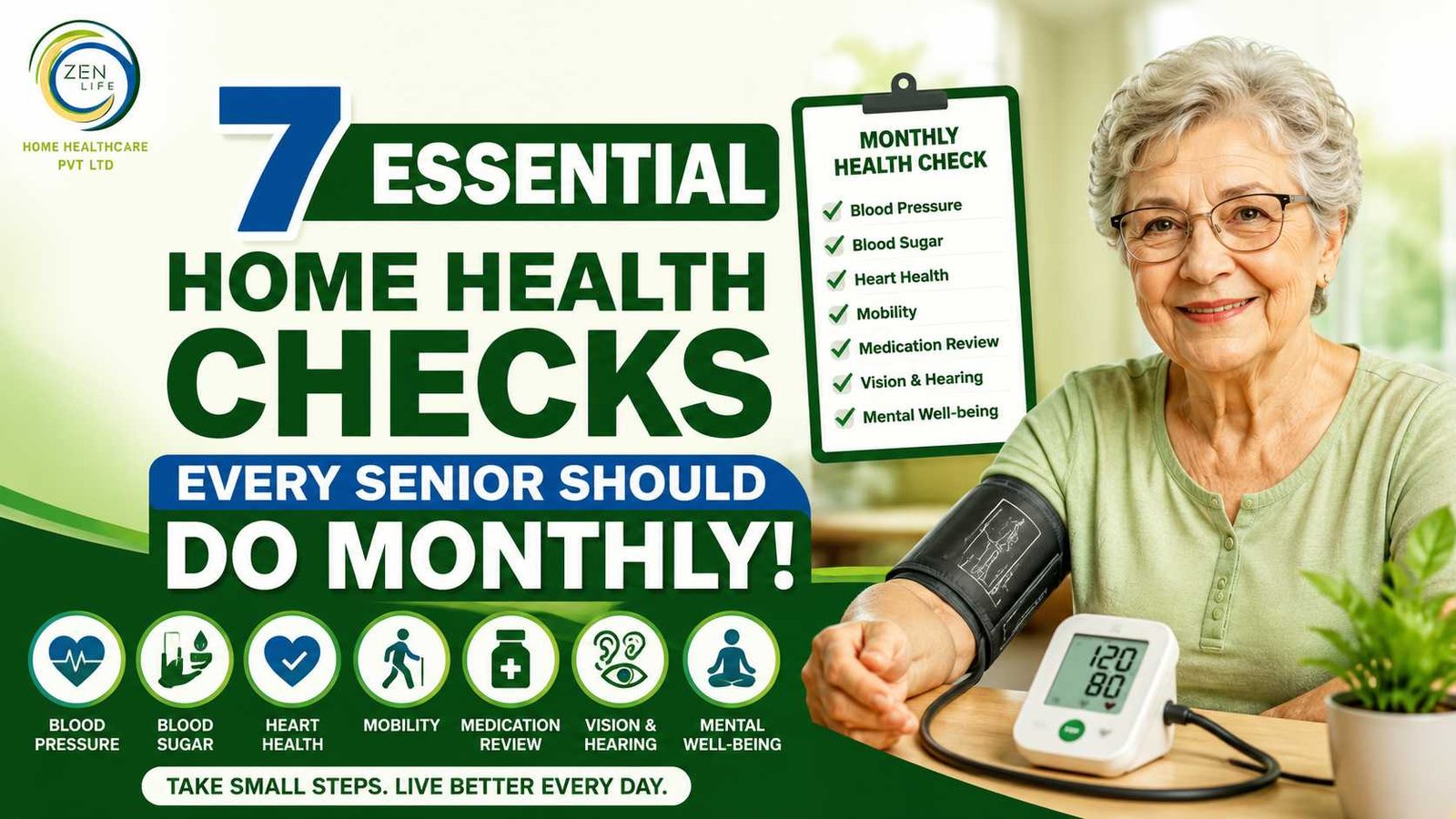
Check 1: Monitor Your Blood Pressure and Heart Rate
Your heart is the engine of your body, and keeping track of how it’s working is crucial for healthy aging.
Why this matters: High blood pressure is called a “silent killer” because you might not feel any symptoms, but it can lead to serious heart problems. A monthly blood pressure check for seniors helps catch any concerning trends before they become dangerous.
How to do it:
- Invest in a good home blood pressure monitor (automatic ones are easiest to use)
- Check your blood pressure at the same time each day, ideally in the morning before eating
- Sit down, relax for 5 minutes, and place your arm at heart level
- Record the reading in a notebook or use a health tracking app
What’s normal? A healthy reading is generally below 120/80. Talk to your doctor about what range is right for you personally.
Beyond blood pressure, learning how to track heart rate at home is equally important. Your heart rate tells you a lot about your cardiovascular fitness and stress levels. A normal resting heart rate for older adults is typically between 60-100 beats per minute.
Pro tip: Use your fingers to find your pulse on your neck or wrist. Count the beats for 60 seconds. It’s free and gives you valuable information about your heart health.
Check 2: Check Your Weight and Monitor Hydration
Weight fluctuations in elderly health can signal underlying issues – whether it’s medication changes, appetite problems, or thyroid issues.
Why this matters: Unexpected weight loss or gain can be an early sign that something needs attention. Older adults sometimes lose weight unintentionally due to dental problems, swallowing difficulties, or medication side effects. Conversely, sudden weight gain might indicate fluid retention or other health concerns.
How to track your weight:
- Weigh yourself on the same day each month, ideally at the same time of day
- Use the same scale for consistency
- Keep a home health tracking log for seniors where you write down the date and weight
- Look for changes of more than 3-5 pounds in a month – that’s worth discussing with your doctor
Don’t forget hydration: Many seniors don’t drink enough water, and dehydration can cause confusion, dizziness, and urinary tract infections. Proper senior hydration tracking tips include:
- Drinking at least 6-8 glasses of water daily
- Keeping a water bottle nearby as a reminder
- Tracking how much you drink, especially on hot days
- Noticing if your urine is dark yellow – that’s a sign you need more fluids
Check 3: Test Your Balance and Assess Fall Risk
Falls are one of the most dangerous health threats for older adults. A monthly mobility checkup at home can help prevent accidents before they happen.
Why this matters: Balance tests for seniors at home can reveal if your muscles are weakening or if you’re having problems with coordination. Catching these changes early gives you time to take preventive action.
Simple balance tests you can do at home:
- The single-leg stand: Hold onto a sturdy chair and stand on one leg for 30 seconds. Switch legs. Can you do this without losing balance?
- The walk and turn: Walk in a straight line for 10 steps, turn around, and walk back. Do you feel steady?
- The sit-to-stand test: Stand up from a chair without using your hands. How easily can you do this?
Check for gait changes in elderly movements: Walk normally through your home. Do you feel confident? Are you shuffling? Dragging one foot? These changes matter.
Create a home fall risk assessment checklist:
- Are there loose rugs that could trip you?
- Is your pathway clear of clutter?
- Do stairs have handrails?
- Is bathroom grab bar inspection done regularly?
- Are light switches easy to find in the dark?
Joint stiffness check for seniors: In the morning, notice how your joints feel. Can you move your neck, shoulders, knees, and hips through their full range of motion? Increasing stiffness might mean your arthritis is progressing or that you need more st
Check 4: Evaluate Your Cognitive Health and Mental Wellness
Your brain health is just as important as your physical health. Many seniors worry about memory, and monthly cognitive health checks can provide peace of mind or alert you to changes worth discussing with your doctor.
Why this matters: Early signs of memory loss in seniors aren’t always obvious. Some forgetfulness is normal, but noticeable changes in thinking, memory, or problem-solving skills deserve professional attention.
Mental alertness tests for elderly that you can do at home:
- Try a crossword puzzle or sudoku – notice if these feel harder than usual
- Read a news article and summarize it to someone – can you recall the main points?
- Try to remember what you had for breakfast, lunch, and dinner – how easily do you recall?
Track your mood and sleep quality: Tracking mood swings in elderly people is important because depression is common but often goes unnoticed. Ask yourself:
- Do you feel sad or empty most days?
- Have you lost interest in activities you enjoy?
- Are you isolating yourself from friends and family?
Sleep quality checks for seniors: Keep a simple sleep log noting:
- What time you went to bed
- How many times you woke up during the night
- What time you woke up in the morning
- How rested you feel
Poor sleep can affect everything else on this list, so it deserves attention.
Watch for senior loneliness and depression signs: Isolation is a serious health threat for older adults. If you’re spending most days alone or feeling disconnected, reach out to a friend, join a senior center, or consider professional counseling.
Check 5: Review Your Medications and Pill Storage
Medication errors are incredibly common in seniors, and many can be prevented with a simple monthly review.
Why this matters: A medication adherence check for seniors ensures you’re taking the right pills at the right time. Missed doses or mixing up medications can cause serious health problems.
Your monthly medication review should include:
- Checking pill expiration dates: Go through your medicine cabinet and look at the expiration dates on all bottles. Expired medications lose their effectiveness and can sometimes be harmful. Throw away any expired pills at a pharmacy (don’t flush them down the toilet).
- Verifying you have the right medications: Make sure each pill bottle has your name and the correct drug name. If you’re taking multiple medications, consider using a pill organizer that you fill once a week – this reduces mistakes.
- Safe medication storage for elderly: Keep all medications in a cool, dry place. The bathroom medicine cabinet seems convenient, but humidity from showers can damage medications. A bedroom drawer or kitchen cabinet works better. Keep medications away from children and pets.
- Making a medication list: Write down every medication, supplement, and over-the-counter medicine you take. Include the dose and how often you take it. Show this list to every doctor you visit.
Pro tip: Set phone reminders for your medication times. This simple trick prevents the “Did I take my pill?” confusion that many seniors face.
Check 6: Conduct a Nutrition Audit and Check for Deficiencies
What you eat affects everything – your energy, your mental clarity, and your overall health. A monthly nutrition audit for elderly people takes just 15 minutes but provides valuable information.
Why this matters: Poor nutrition is surprisingly common in seniors and can lead to weakness, falls, slow healing, and weakened immunity. Vitamin deficiency signs in seniors include fatigue, weakness, bone pain, and difficulty healing wounds.
Your monthly nutrition check:
- Look at what you’ve eaten over the past week
- Are you getting enough protein? (This protects your muscles and bones)
- Are you eating fruits and vegetables? (Aim for colorful variety)
- Are you getting enough calcium and vitamin D? (Essential for bone health)
- Are you eating enough fiber? (Helps with digestion)
Foods to focus on:
- Protein: chicken, fish, eggs, beans, yogurt
- Calcium: milk, cheese, leafy greens, fortified orange juice
- Vitamin D: fatty fish, egg yolks, fortified milk, or supplements
- Fiber: whole grains, vegetables, fruits, beans
If you notice you’re not eating well, talk to your doctor. Sometimes seniors don’t eat enough because of dental problems, difficulty swallowing, loss of appetite, or depression – all of which are treatable.
Check 7: Complete a Home Safety Audit
Your home should be your safe haven. A monthly home safety audit for seniors protects you from accidents that could change your life.
Why this matters: Many seniors experience falls and accidents at home that could have been prevented with simple safety checks.
Your monthly safety checklist:
Lighting checks for elderly safety:
- Can you see clearly throughout your home?
- Are hallways and stairs well-lit?
- Do you have nightlights so you can safely get to the bathroom at night?
Checking smoke detector batteries monthly:
- Test each smoke detector by pressing the button
- Replace batteries if the alarm sounds weak
- Do the same for carbon monoxide detectors
Bathroom grab bar inspection:
- Are bars securely attached and able to hold your weight?
- Are they placed where you need them most – near the toilet and tub?
- Does the bathroom floor have a non-slip mat?
Trip hazard check for seniors:
- Walk through each room and look for loose rugs, clutter, or wires
- Make sure pathways are clear
- Remove items from stairs
- Use furniture that won’t wobble if you hold onto it
Home temperature safety for elderly:
- Can you adjust your thermostat easily?
- Do you have a way to cool your home in summer and heat it in winter?
- Extreme temperatures are dangerous for older adults